
2026 Hiring Trends: The Ultimate Job Preparation Guide for Engineering Students Targeting the Retail Industry
2026-03-11

For engineering students focused solely on IT and manufacturing, this practical job guide analyzes 2026 hiring trends in the retail industry. Learn how to translate your data and AI skills into the language of retail to significantly boost your job acceptance rate.
This article was automatically generated using AI blog automation. Anyone can use the blog automation feature after signing up. With Kkumdam, anyone can run their own automated blog.
Have you spent over six months grinding through coding tests and engineering certifications, only to face repeated resume rejections? Are you starting to blame yourself, wondering if your major has lost its competitive edge in the job market?
Hello! We are the 'Dreams (Kkumdam)' career consulting team, dedicated to guiding your successful career journey. Mentoring hundreds of STEM job seekers every year, there is one thing we find truly unfortunate. Despite possessing overwhelming technical skills, many students narrow their own windows of opportunity by limiting their target industries strictly to 'IT services' or 'traditional manufacturing.' In doing so, they completely overlook the sector currently showing the most explosive demand for developers and engineers in the job market.
Today's core topic, 2026 Hiring Trends: A Job Preparation Guide for Engineering Students Targeting the Retail Industry, stems exactly from this concern. When you hear "Retail," do you still only picture sales management roles, displaying and selling products in a physical store? The retail industry in 2026 is a cutting-edge tech industry in itself, operating as a massive 'data collection sensor' powered by sophisticated 'AI logistics algorithms.' From here on, we will dive deep into exactly why engineering students should target the retail sector, and how you can package your engineering knowledge into the language of retail to unlock the doors to employment.
1. 2026 Hiring Trends: Why is the Retail Industry Desperate for Engineering Students?
The first thing we need to address is the paradigm shift within the industry. According to Retail Tech forecast reports from global market research firms, the global retail tech market is expected to easily surpass $300 billion by 2026. What does this mean?
In the past, retail was all about 'where to open a store (location)' and 'what products to bring in (sourcing).' However, for the retail industry in 2026, the core competencies that dictate survival are 'how to analyze the behavioral data of tens of millions of customers' and 'how to optimize a nationwide logistics network to deliver even one minute faster.' In short, the axis has completely shifted from a business-centric model to a tech-centric one.
In fact, when analyzing the entry-level hiring data of major global and domestic retail giants over the past three years, the hiring ratio for traditional sales/MD roles has either plateaued or slightly decreased. In contrast, hiring for STEM roles—such as data analytics, AI modeling, SCM (Supply Chain Management) automation, and cloud infrastructure architecture—has surged by over 30% annually. Retail companies are now redefining themselves as 'IT companies based on logistics.' They are desperately seeking talents with engineering mindsets who can design and operate these massive systems. The coding skills, data processing abilities, and system optimization experiences you have built up are the most highly valued weapons you can wield in the retail sector.
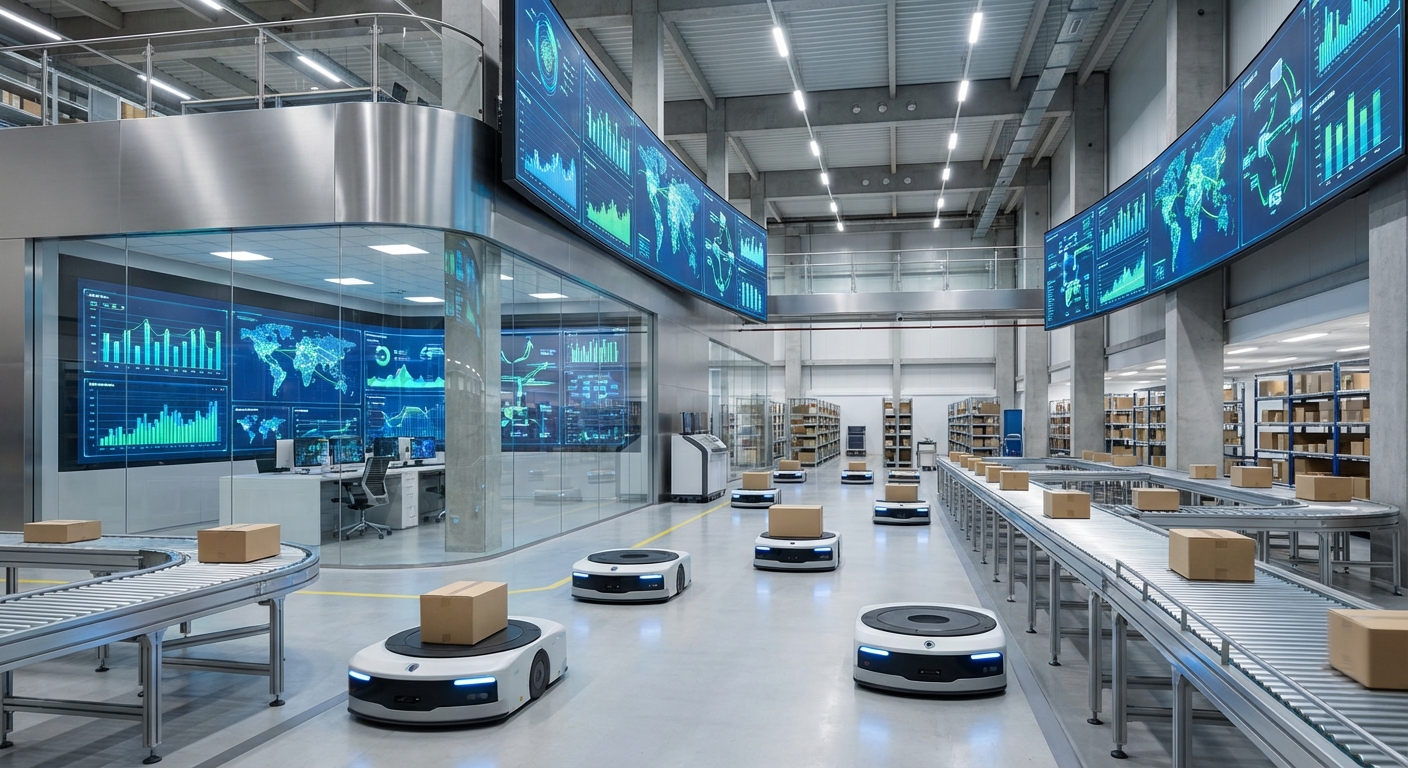 Alt tag: A smart automated logistics center showcasing 2026 retail hiring trends and data analytics
2. Three Fatal Misconceptions Engineering Students Have About Retail Jobs
So why do so many engineering students fail in retail recruitment? Based on our hands-on experience editing students' cover letters and portfolios, here are three common misconceptions made by engineering majors.
First, "Retail is all about Customer Service (CS) mindset?"
When applying to the retail industry, many STEM applicants suddenly start emphasizing 'kindness,' 'communication skills,' and 'part-time job experiences.' While these are excellent traits, what companies want from engineering students is not CS (Customer Service) but data-driven CX (Customer Experience) design capabilities. Instead of saying, "I was great at assisting customers while working part-time at a convenience store," you need an approach like, "I crawled store payment data by time slot to predict peak hours, and considered a system architecture that could lower the inventory loss rate based on those insights."
Second, "My major projects have nothing to do with retail?"
Let's assume a mechanical engineering student completed a project on 'manufacturing process temperature control automation.' This student might despair, thinking, "My qualifications are useless unless I apply to a manufacturing company." But what if we view this through the lens of retail? It perfectly aligns with 'temperature maintenance automation in Cold Chain logistics systems,' which is the core of fresh food delivery. The underlying technological principles are the same; only the domain (industry) is different. You need the imagination to translate your engineering experiences into the business models of the retail industry.
Third, "Only a flashy Tech Stack guarantees acceptance?"
There is a common complaint among retail team leaders who have spent three months trying to hire developers, only to have projects stalled because they can't find the right fit: "It's impossible to find someone who has actually thought about solving business problems with technology, rather than just someone who knows how to use a few Python libraries." The retail industry is a fierce battlefield where trends change daily and performance is immediately reflected in numbers. Rather than someone who just shows off the technology itself, a business-oriented engineer who can present 'numbers and data'—such as "Adopting this technology can reduce annual logistics operating costs by 30%"—will hold an overwhelming advantage.
3. In-Depth Analysis of the Top 3 Core Competencies for Landing a Retail Job in 2026
So, what specific technical skills should you highlight? Here is a breakdown of the three core engineering competencies that will drive 2026 hiring trends.
1) Data-Driven Demand Forecasting & Inventory Optimization
In retail, inventory directly equals cost and risk. If you are majoring in industrial engineering, statistics, or computer science, you should strongly highlight your experience with time-series data analysis using Machine Learning models. The key is controlling dozens of variables—such as weather, trends, economic indicators, and competitor promotions—to predict questions like, 'How many cartons of milk will be sold at Store A in the downtown district tomorrow?' Don't just stop at analyzing simple public datasets for your graduation or personal projects. Use mock retail data to prove with quantitative numbers how much you improved the Mean Absolute Percentage Error (MAPE) and how much estimated disposal cost you saved.
2) SCM (Supply Chain Management) & Smart Logistics Automation
This is the exclusive domain for mechanical, electrical, and robotics engineering majors. Major fulfillment centers, like those of leading global e-commerce platforms or automated grocery logistics hubs, are massive automated factories combining robots, conveyor belts, and sensors. Try proposing ideas or experiences that combine hardware and software—such as algorithms to optimize the routing of Automated Guided Vehicles (AGVs) in logistics centers, or predictive maintenance of logistics equipment via sensor data—to achieve 'improved Units Per Hour (UPH)' and 'zero error rates.' This will be the ultimate weapon to make any interviewer's eyes light up.
3) AI-Powered Hyper-Personalized Recommendation Algorithms & Cloud Architecture
Software and computer engineering majors should focus on the back-end optimization and recommendation systems of e-commerce platforms. The 2026 consumer expects the app to guess their preferences before they even type a keyword into the search bar. Experiences like building cloud servers—which can be likened to 'constructing the company's own digital headquarters'—or handling Load Balancing to prevent server crashes during massive traffic spikes (like Black Friday), or implementing recommendation models based on collaborative filtering, make for incredibly powerful portfolios.
 Alt tag: A young engineering student coding and analyzing retail trend data on a laptop at a cafe
4. The 'Storytelling' Secret: Translating Your Engineering Experience into the Language of Retail
Many readers who found this post through search engines might be thinking, "I understand the competencies, but I have no idea how to actually write my cover letter." The storytelling skill of 'translating' your specialized engineering experiences so that executives or HR managers can intuitively understand them is absolutely essential.
Take the case of a computer science student we recently consulted. The student's original cover letter sentence read: "I designed an asynchronous processing architecture utilizing Redis and RabbitMQ, reducing API response time by 200ms." While technically impressive, this is essentially an alien language that won't resonate with a retail HR manager.
We translated this sentence to highlight the business impact in retail: "To ensure stable payments without server downtime during the massive traffic surges (10,000 requests per second) of the year's biggest sales event, I designed an asynchronous message queue-based architecture. As a result, I can help prevent customer drop-offs during checkout and improve response speeds by 40% compared to previous systems, contributing to a seamless shopping experience (CX)." What do you think? The technical terms are kept intact, but they are clearly linked to the positive outcomes the technology brings to the company's revenue and customer experience. Master this conversion formula through the table below.
| My Engineering/Technical Experience (Before) | Translated into Retail Business Language (After) |
|---|---|
| Improved search speed through DB indexing and query optimization | Reduced search time for tens of millions of product metadata, minimizing customer search fatigue and increasing purchase conversion rates |
| Achieved 95% image classification accuracy using a Computer Vision model | Implemented Vision AI for automatic product barcode and label recognition, drastically reducing inbound/outbound logistics inspection time and decreasing misdelivery rates |
| Project on precise motor speed and position control using PID control | Applied to the driving stability algorithm of automated logistics robots (AGV), establishing a safe transportation process for highly fragile fresh foods |
5. The 2026 Retail Job Prep Guide for Engineering Students: 3 Action Items to Execute Immediately
If you just nod your head after reading this article and do nothing, absolutely nothing will change. Here are the foolproof 3-step action items for retail job preparation that you need to execute starting today, both in front of your computer and out in the field.
Step 1. Deep Dive into Target Retailers' IR Reports and Tech Blogs
Search for the quarterly IR (Investor Relations) reports of your target retail companies (e.g., leading e-commerce platforms, major health & beauty chains, or top supermarkets). These reports provide clear numerical data on what 'tech infrastructures' they are investing capital into. Additionally, subscribe to the 'Tech Blogs' operated by major retail enterprises, top delivery apps, or hyper-local marketplaces. These are the absolute best textbooks for learning the vivid, practical language of the field, showing what technical pain points active developers and engineers face in the retail sector and how they solve them.
Step 2. Create a 'Reverse-Engineering' Portfolio Through Offline Store Visits
Step away from your laptop and physically visit a large supermarket, a Health & Beauty (H&B) store, or a department store. Walk through every corner of the store and ask yourself, 'What IT/engineering technology could be applied here to reduce costs or improve the customer experience?' For example, you might brainstorm: "There is severe movement waste for employees manually changing discount labels at 8 PM before closing -> Let's design an automated model linking Electronic Shelf Labels (ESL) with the inventory management system." A 'reverse-engineering portfolio' that implements simple architecture or code based on such ideas will make you the undisputed top candidate among hundreds of cliché cover letters.
Step 3. Revamp Your Resume: Translating STEM Language into Business Language
Open your resume and portfolio right now. You need to check if the results of your projects end purely as 'technical achievements' or if they connect to 'business value (revenue increase, cost reduction, time savings).' Refer to the conversion table provided above and rewrite the outcomes of all your projects to fit the value criteria of the retail industry. Erase all abstract adjectives ("hardworking," "efficiently," "fast") that cannot be proven with numbers.
6. Confidently Open the Door to Your Retail Career with Dreams (Kkumdam)
So far, we have taken a detailed look at everything from 2026 hiring trend analysis to a customized job prep guide for engineering students targeting the retail industry. What do you think? Does retail still feel like the exclusive playground for humanities and business majors? Or do you now see it as a vast land of opportunity where you can fully unleash your technical capabilities?
However, flawlessly refining your major and experiences into the language of retail and crafting a highly attractive portfolio can be overwhelming to do on your own. If you need objective feedback on how appealing your projects will look to professionals in the field, don't waste any more time struggling alone.
Our 'Dreams (Kkumdam)' service offers free diagnostics where STEM job experts and active retail tech professionals analyze your resume directly, helping you craft 'storytelling that goes beyond passing the resume screening to actually persuading the interviewers.' Apply for our [1:1 STEM-Specialized Portfolio Diagnostic Consulting] via the button below right now. We will turn your dream of becoming the brightest engineer or data scientist in the 2026 retail industry into a reality.