
2026 Vibecoding Innovation: Meet Kkumdam's 'AI Vibe Coach'—Your Perfect IT Problem Solver
2026-03-27
Explore the core and limitations of 'Vibecoding', the new development paradigm of 2026. Discover how Kkumdam's 'AI Vibe Coach' acts as the ultimate problem solver, turning the ideas of non-developers and founders into reality.
This article was automatically generated using AI blog automation. Anyone can use the blog automation feature after signing up. With Kkumdam, anyone can run their own automated blog.
2026 Vibecoding Innovation: Meet Kkumdam's 'AI Vibe Coach'—Your Perfect IT Problem Solver
Have you ever paid tens of thousands of dollars to an outsourcing agency, only to find your project stalled 6 months later without even a prototype to show for it?
Or perhaps you’ve thought, "It's the AI era, I'll build it myself," bought a Python book, and immediately felt defeated by a flood of error messages during the environment setup phase?
If you nodded yes to either of these questions, this article will be the most important turning point that drastically saves your time and money.
In 2026, we are saying goodbye to the era of typing out complex, alien-like code on a keyboard. Filling this void is 'Vibecoding', a method of building software through natural conversation and flow. And at the heart of this massive innovation is Kkumdam's newly introduced problem solver: the 'AI Vibe Coach'.
In today’s post, I will dive deep into the true reality of Vibecoding—insights you won't find in the endless sea of information on Google—and provide practical solutions based on my personal experience and concrete data to help you leverage it 100%.
1. The 2026 Development Paradigm Shift: Why 'Vibecoding' Now?
The Evolution from Typing to Prompting
Just a few years ago, 'coding' meant memorizing the syntax of programming languages like C++, Java, and Python, and manually typing out tens of thousands of lines of code. The barrier to entry was incredibly high, making it the exclusive domain of highly trained professional developers.
However, in 2026, the situation has completely flipped as generative AI technology crossed a critical threshold. According to recent reports from global IT research firms, approximately 80% of new commercial software code in 2026 is being written with the help of AI. This is the very core of Vibecoding.
Vibecoding is a new development methodology where a developer interacts with AI using natural language—creating, modifying, and deploying code as if riding a rhythm (vibe). You simply say, "Make this button download user data to an Excel file," and the AI instantly writes the perfect code for it.
The Light and Shadow of Vibecoding from My Own Experience
As a product manager from a non-developer background, I felt tremendous shock and joy when I first encountered Vibecoding tools (like Cursor and GitHub Copilot) last year. I thought, "Wow, I can finally build my ideas with my own hands without needing a developer!"
But the reality was harsh. While creating a simple to-do list or a landing page took just 10 minutes, I quickly hit a massive wall when transitioning to commercial-level services involving payment systems and complex databases.
I couldn't understand why the code the AI generated wasn't working or where the conflicts were happening. Eventually, I fell into an 'endless swamp of debugging'—asking the AI to fix an error, only for it to spawn another one—and wasted three precious weeks.
2. Why Does Solo Vibecoding Hit a Wall? (Core Pain Points)
Many people watch YouTube videos or read blogs about "Building an App in 1 Hour with AI" and start their journey filled with hope. However, the reason why over 90% give up halfway is clear.
First, they don't know how to draw the 'architectural blueprint.'
AI is the world's most capable, top-tier excavator and a universal toolkit. But if you don't know how to build the framework of the house (software) you want to build, or how to connect the plumbing (data flow), this universal tool will just pointlessly dig up empty lots.
The ability to design 'software architecture'—such as how to separate the frontend and backend or what cloud server structure to use—remains a uniquely human domain.
Second, the resolution of their prompts is too low.
Asking an AI to "build a good shopping mall" will yield cliché and sloppy results. Conversely, if you clearly instruct it to "Create a mobile-first responsive UI using React and Tailwind CSS, and manage state with Zustand," it will produce expert-level code.
In other words, you don't need to know coding syntax, but you do need to understand the principles of how IT systems operate and the professional terminology (concepts) to properly direct the AI. For an average founder or non-developer to acquire this in a short period is practically impossible.
Third, they are vulnerable to hallucinations and security issues.
AI occasionally tells plausible lies. It might recommend non-existent libraries or present code with fatal security vulnerabilities as the correct answer. Beginners lack the ability to filter these out, putting them at high risk of horrific incidents like massive data leaks or server crashes after launching their service.
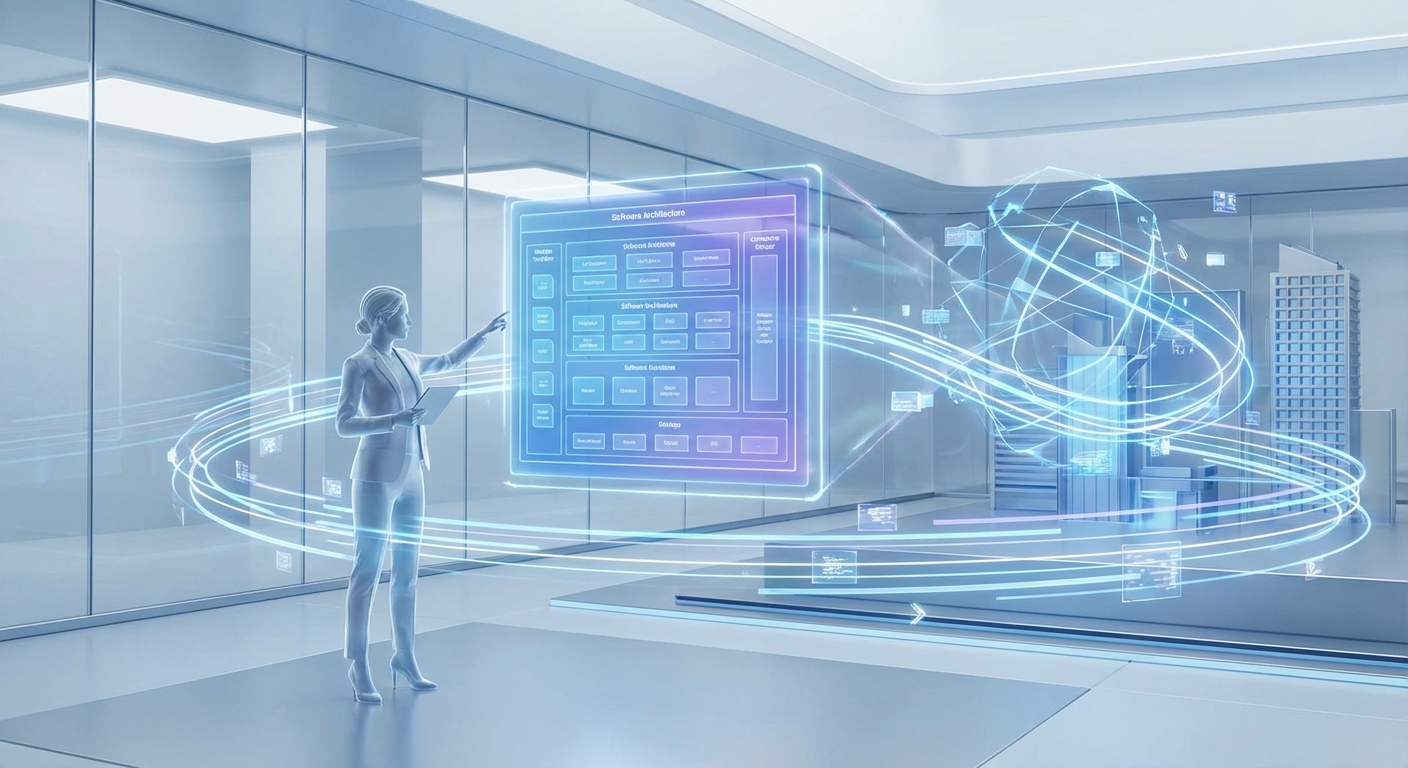
3. A New Innovation for 2026: Meet Kkumdam's 'AI Vibe Coach'
To completely overcome this confusion and these limitations, the newly introduced solution for 2026 from the 'Kkumdam' service is precisely the 'AI Vibe Coach'.
The AI Vibe Coach is not just a simple coding instructor or outsourced developer. They are top-tier architects, pacemakers, and problem solvers with a profound understanding of generative AI technology and extensive experience in building numerous projects.
What is the difference between 'Outsourced Development' and 'AI Vibe Coaching'?
Traditional outsourcing was like a 'black box.' You hand over a planning document, and the agency writes the code and delivers the finished product. Along the way, costs inflate, timelines stretch indefinitely, and you become dependent solely on that agency for maintenance.
However, the process with an AI Vibe Coach is like a 'transparent glass box.'
- Direct Control: The coach translates your idea into a system structure and guides you on which prompts to use to communicate with the AI. The AI writes the code, but you give the commands.
- Real-Time Problem Solving: When you hit a blocking error, the coach intervenes immediately, analyzes the root cause, and provides a solution. They rescue you from the endless swamp of debugging in an instant.
- Internal Assetization: After the project ends, you don't just walk away with an app. You equip yourself with the powerful weapon of 'Vibecoding proficiency,' allowing you to maintain and scale the service yourself using AI.
4. The Problem Solver: 3 Overwhelming Data Points Created by AI Vibe Coaches
Instead of using vague words like 'innovation,' let me prove the actual value that Kkumdam's AI Vibe Coaches provide to B2B and B2C clients with concrete numbers.
① 80% Reduction in Development Costs Compared to Outsourcing (Cost Efficiency)
Typically, developing a platform MVP (Minimum Viable Product) through outsourcing requires a minimum budget of $25,000 to $40,000. This is because you are paying full labor costs for project managers, designers, and frontend/backend developers.
However, when you pursue Vibecoding with an AI Vibe Coach, you can launch an MVP for an average coaching and system architecting cost of just $4,000 to $8,000. By having AI replace the role of a hands-on developer, while you and your coach handle planning and review, the unnecessary bubble of labor costs is completely eliminated.
② Development Time Shortened from 6 Months to 3 Weeks (Time to Market)
The most critical factor in startups and business is 'speed.' You need to test the market's reaction quickly, but outsourced development often stretches well over half a year due to miscommunication and schedule delays.
Kkumdam's coaches proactively provide verified prompt templates and automated pipelines (CI/CD). Through this, projects that would normally take 6 months are recording astonishing results, being compressively completed in just 3 to 4 weeks. This is the result of combining AI's speed—churning out code by the minute instead of the hour—with the precise directional guidance of a coach.
③ Achieving a 95% Maintenance Independence Rate (Sustainability)
The most noteworthy data point is the maintenance independence rate. After the coaching ends, 95% of client companies do not sign external maintenance contracts. Instead, they handle text or image updates and simple feature additions completely in-house.
"A marketing team member who didn't know the first thing about coding is now using the guide documents left by the coach to converse with AI and modify landing page copy directly. We've saved tens of thousands of dollars in annual maintenance fees." (From a real Kkumdam client interview)
5. Real-World Case Studies: The Miracle of 'Kkumdam' Coaching
So, how do these problem solvers actually operate in the field? Let's look at the concrete process through two recent, highly-discussed real-world coaching case studies.
Case Study 1: A Non-Developer CEO's 10-Day EdTech Platform Launch
CEO 'A', who ran an offline tutoring center, had an idea for an EdTech app that analyzes students' incorrect answer notes using AI. However, after receiving quotes of over $30,000 from three different outsourcing agencies, they were on the verge of giving up.
After being matched with a Kkumdam AI Vibe Coach, the situation drastically turned around. The coach first analyzed CEO A's idea and designed the 'lightest possible tech stack' (Next.js + Supabase). Following this, through twice-weekly Zoom meetings, the coach shared their screen and wrote prompts with CEO A to command the AI.
CEO A provided the domain knowledge (educational logic), and the coach translated (architected) it into a language the AI could understand. Astonishingly, in just 10 days, an app was launched into the world with all its core features fully functional—user registration, incorrect answer image uploads, and AI analysis result generation.
Case Study 2: Introducing an Internal Workflow Automation Tool at a Mid-sized Enterprise
Manufacturing Company 'B' was wasting 20 hours a week manually transcribing hundreds of handwritten inventory logs into Excel. The internal development team was too busy with other main projects and had declined to help.
An operations team member at Company B, with the help of an AI Vibe Coach, personally built an internal admin page where taking a photo automatically inputs values into the database via Optical Character Recognition (OCR) technology. The coach reviewed the architecture to ensure the AI coding could be done securely within a complex security network and fixed any errors.
As a result, an innovative automation tool that saves thousands of work hours annually was born from the hands of a single operations team member, without any outsourced development.
6. A 5-Step Action Plan for Foolproof Vibecoding (Checklist)
Has reading this sparked a motivation to try Vibecoding right away? If so, before you close this tab, be sure to take away this 'Essential Vibecoding Checklist' that you can apply directly to your work. This is the know-how that Kkumdam coaches always emphasize in the field.
- Let Go of Greed (Define 1 Core Feature): Don't try to build Uber or Airbnb right out of the gate. Write down exactly one feature (MVP) that delivers the most core value in a single, clear sentence.
- Sketch the Screen Design (UI Flow): Before diving into development, you must draw a rough sketch on an iPad or paper showing what sequence of buttons the user will press and how the screens will transition. This drawing becomes excellent material for your prompts.
- Assign a Role to the AI: Don't just blindly ask the AI chat to write code. You must assign a persona to drastically improve the quality of the answer, such as: "You are now a senior frontend developer with 10 years of experience. Listen to my business requirements and first recommend the optimal tech stack."
- Ask in a 'Modular' Way: If you ask it to build the entire service at once, it will fail unconditionally. Break your instructions down into very small units, like "Step 1: Create a header navigation bar," or "Step 2: Build the login form UI."
- Limit Time Spent Struggling Alone (Time-boxing): If it takes you more than 2 hours to fix a specific error, it’s not your fault; your direction is wrong. This is the exact moment you need to boldly hit pause on the code and borrow the eyes of an expert (coach).
* A detailed 'Vibecoding Prompt Example Collection.pdf' based on this checklist is available for free when you sign up on the Kkumdam homepage.
7. Conclusion: It's Time to Turn Your Ideas into Reality
In 2026, the barriers of technology have already crumbled. The fact that you don't know how to code can no longer be an excuse for why your brilliant ideas haven't made it out into the world.
However, just because technology has gotten easier doesn't mean the process of building a great product is a walk in the park. To avoid getting lost in the overflowing sea of AI tools and to create the best results in the shortest time, you need an accurate compass and a reliable Sherpa.
Kkumdam's 'AI Vibe Coach' will fulfill that role. We will break down the complex logic you've stayed up all night trying to solve and the daunting walls of planning where you didn't know where to start, all in the most efficient and smart way possible.
Stop Wasting Precious Time on Developer Hiring and Outsourcing Quotes.
Access the Kkumdam service right now to get your idea's feasibility diagnosed and meet the perfect AI Vibe Coach. We are currently offering '1:1 Free Project Structure Diagnostic Consulting' on a first-come, first-served basis. A dilemma that would take you 3 months alone will be clearly resolved with a 30-minute conversation with a coach.
Apply for Kkumdam's Free AI Vibe Coach Consulting →