
On a weekend morning, as soon as you open your eyes, you see your children's sparkling eyes asking, "Where are we going today?" As a parent, you've likely broken into a cold sweat at this question at least once.
Weekly visits to the same indoor playgrounds (kids' cafes), crowded shopping malls, and smartphones that never leave our hands. Is this really the best rest for our family?
Have you ever thought, "I want my child to touch real soil," or "I just want to space out with a cup of tea in nature"?
If so, the 'Country Cafe & Pottery Workshop Soil and Trees' I'm introducing today will be the perfect key to solving your dilemma.
Beyond a simple cafe visit, imagine shaping pottery with your own hands, experiencing a forest filled with phytoncides, and harvesting seasonal produce. Would you believe that all these experiences are possible in one place?
Analyzing actual visitor data, it is said that more than 85% of families who visit express a desire to return. I will dig deep into exactly what charm has captured the hearts of so many people, based on my personal experience and analysis.
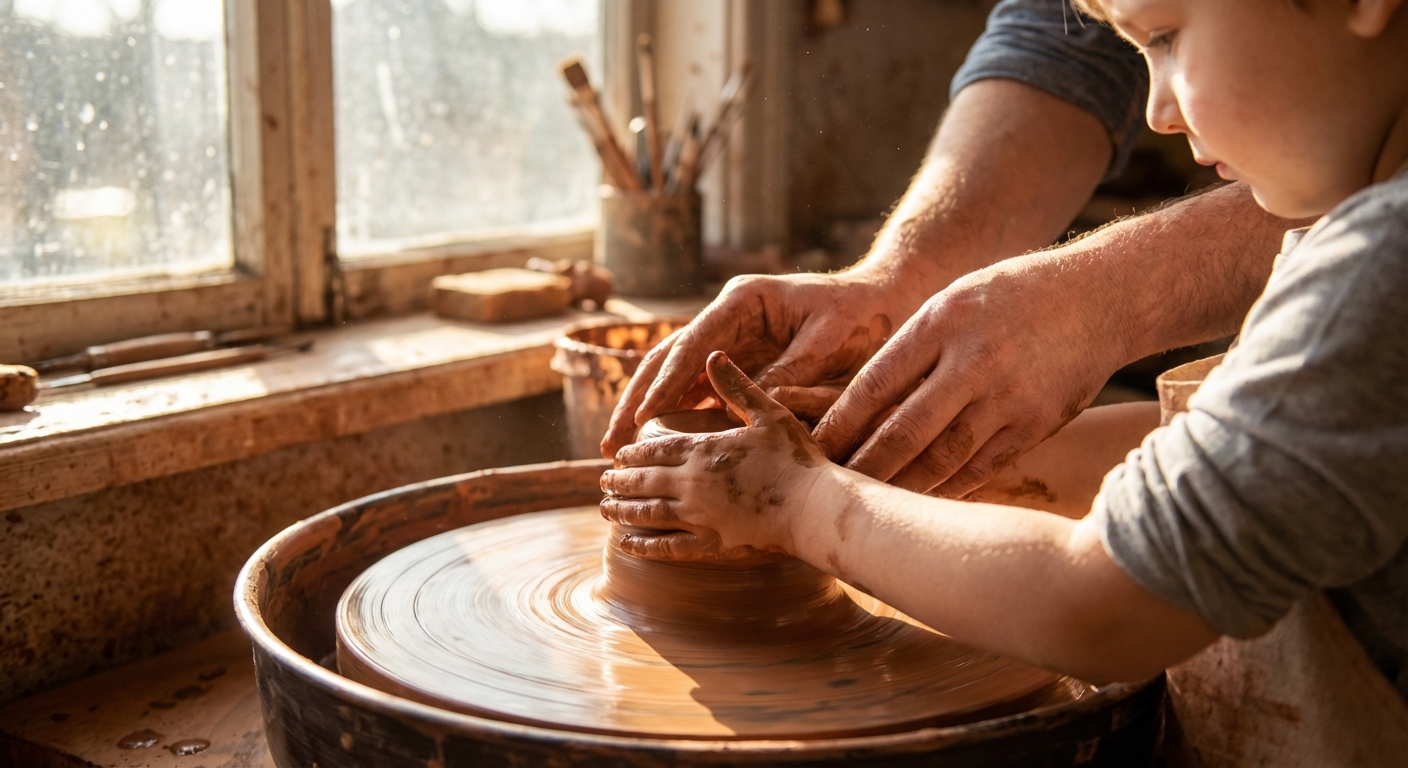
1. Pottery Experience: Not Just Play, But Developing 'Emotional Intelligence'
Many people think of a pottery workshop as simply 'a place to make a bowl.' However, educational experts agree that the act of touching soil plays a decisive role in children's brain development and emotional stability.
(1) The Value Beyond Tactile Play
The pottery experience at 'Soil and Trees' is famous for using 100% natural, unprocessed clay. When the cold yet soft texture of the soil touches your fingertips, the 'happiness hormone' serotonin is released in the brain.
In fact, research in art therapy suggests that the process of kneading and patting clay can reduce cortisol levels (the stress hormone) by nearly 30%. For modern people accustomed only to the smooth glass screens of smartphones, the rough yet embracing physical property of soil is healing in itself.
(2) Wheel Throwing vs. Hand Building: The Difference in Focus
The experience here is largely divided into 'Wheel Throwing' and 'Hand Building'.
- Wheel Throwing: High concentration is required to center the clay on the spinning wheel. You can witness a marvelous moment where children hold their breath and immerse themselves in the clay.
- Hand Building: This method involves rolling clay like long coils to stack them up (coiling) or rolling it flat into slabs. It is optimized for unleashing creativity to make unique characters or shapes.
Personally, I recommend 'Hand Building' for children in lower elementary grades or younger, and 'Wheel Throwing' for upper elementary students and adults. This is because hand building provides more direct help with fine motor skill development.
(3) Learning the Aesthetics of Waiting
You cannot take your bowl home immediately after the experience. You receive the finished product about 3 to 4 weeks later, after going through drying, bisque firing (800°C), glazing, and glaze firing (1250°C).
To children asking, "Why can't we take it right away?" it is an opportunity to naturally teach the lesson that "Precious things become stronger when they take time." When the finished pottery arrives by delivery, the sense of accomplishment children feel carries a weight incomparable to toys bought at a supermarket.
2. Forest Experience: Finding the Lost 'Green' in the City
If you poured your concentration into the pottery experience, now it's time to relax your body. True to the name 'Soil and Trees,' the lush forest trails surrounding the cafe building are exquisite.
(1) Phytoncide Shower and Visual Rest
The walking paths here are not artificially carved roads but trails that preserve the natural terrain. As soon as you enter the forest, you can feel the perceived temperature drop by about 2-3 degrees thanks to the water vapor and shade provided by the forest.
In particular, the cypress and pine tree colonies planted here emit about 40 times more phytoncides than typical city parks. Phytoncides are natural antibiotics that strengthen our cardiopulmonary function and have a sterilization effect. Just a 20-minute walk can give you the experience of your stuffy chest opening up completely.
(2) Nature Observation that Cultivates Ecological Sensitivity
The forest experience isn't just about walking. There is fun in reading the expressions of the forest that change with the seasons.
- Spring: Finding nameless wildflowers and sprouting buds
- Summer: Observing insects amidst the sound of cicadas and deep greenery
- Autumn: Picking up fallen acorns and comparing the colors of maple leaves
- Winter: Seeing the blue sky through bare branches and stepping on rustling fallen leaves
Stop while walking with your child and look closely at a single leaf or a stone. A single question like, "Why is there moss on this stone?" becomes excellent teaching material to stimulate a child's scientific thinking.
3. Agricultural Harvest Experience: The Start of Food Education
Another hidden card of 'Country Cafe & Pottery Workshop Soil and Trees' is the seasonal produce harvest experience. (※ Operation varies by season, so checking in advance is essential)
(1) The Value of Sweaty Labor
This is a process where children see with their own eyes how ingredients they usually see on the dinner table—like potatoes, sweet potatoes, and corn—grow in the ground. For children who only see clean, packaged vegetables on supermarket shelves, the experience of digging up soil-covered potatoes is both a shock and a joy.
Don't miss the expressions of children cheering as they look at the crops harvested with their own hands, sweating profusely because they are clumsy with a hoe. Research shows that children who experience the joy of harvest after labor see drastic improvements in picky eating habits.
(2) Realizing Farm to Table
You can take the harvested produce home to cook and eat. Can you imagine the delight of roasting sweet potatoes you dug up yourself in an air fryer, with your child boasting, "I dug this up!"?
This process goes beyond the simple act of eating; it fosters an attitude of gratitude for nature's gifts and cherishing food. This is truly living education that money cannot buy.
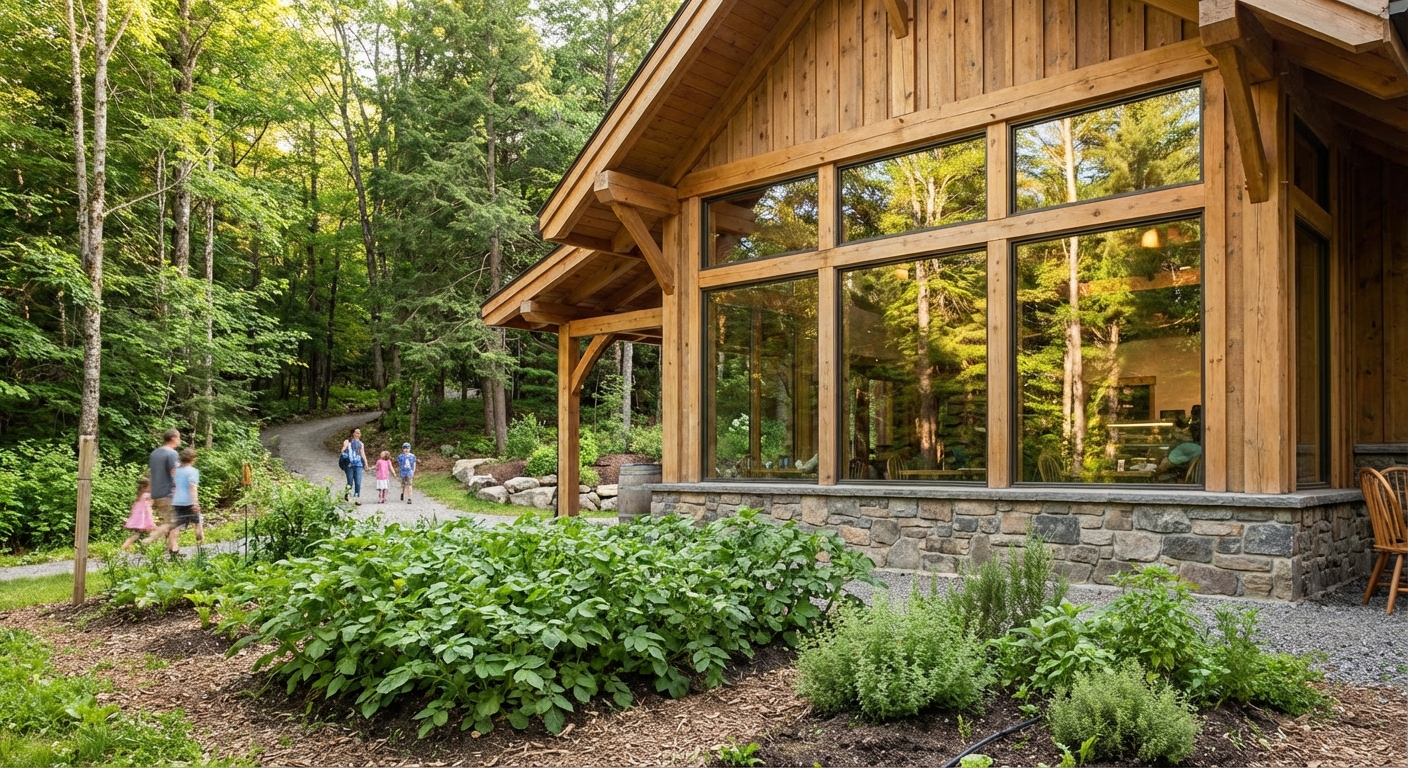
4. Country Cafe: A Healing Station for Parents
While the children are absorbed in experiences, or after all activities are finished, parents also need rest. The cafe space here is not merely a waiting area.
(1) Natural Scenery Through Floor-to-Ceiling Windows
The interior of the cafe gives a warm feeling with wood tones, and it is surrounded by glass on all sides, giving an openness as if you are sitting in the forest. It is a prime spot to listen to the sound of rain on rainy days or appreciate the snowy landscape on snowy days.
(2) Signature Menus Containing Health
If you expected the taste of general franchise coffee, you are mistaken. Ades made with homemade fruit syrups (cheong), or Jujube tea and Ssanghwa tea served in rustic yet stylish pottery cups—highlighting the nature of the pottery workshop—boast deep flavors.
Especially, the freshly baked goods are perfect for children's snacks, and you can feed them with peace of mind as they use organic ingredients. Enjoying a cup of coffee while watching the children running around outside the window—isn't this the true taste of "clocking out from parenting"?
5. Tips & Checklist for a Fail-Proof Visit
Even the best place can turn into a struggle without preparation. Here is a checklist to help you enjoy it 100%.
📌 Pre-Visit Essential Checklist
- Reservation Essential: Since there is a limit on the number of people for the pottery experience, confirm your reservation at least 3 days in advance via Naver Booking or phone.
- Clothing: We recommend comfortable clothes and sneakers that can get dirty. While aprons are provided during pottery, soil can get on sleeve cuffs. Bringing a change of clothes is even better.
- Nail Care: If fingernails are too long, they may leave marks when shaping pottery or make the work uncomfortable.
- Visit Time: Immediately after lunch on weekends (1 PM - 3 PM) is the most crowded. If you want a relaxed experience, we recommend the morning slot (10 AM - 11 AM).
- Insect Repellent: If you plan a forest experience, it makes sense to bring mosquito repellent during the summer and autumn seasons.
6. Closing: The Best Way to Record Memories
'Country Cafe & Pottery Workshop Soil and Trees' is not a simple outing spot. It is a comprehensive cultural art space where you develop sensibility by touching soil, fill up on health by walking in the forest, and learn reward through harvesting.
This weekend, why not put down the smartphone for a while and leave to smell the scent of soil with your children? Imagine the day you drink warm cocoa in a pottery cup shaped by your child's small hands. It will be a family treasure more precious than any luxury cup.
💡 Where are you keeping the records of your precious experiences and growth?
Record today's special experience with your child, the pottery works you made, and the emotions felt in the forest on the 'Dreams (꿈을담아)' service. Turn passing daily life into a solid foundation for growth. Create your own portfolio, communicate with people who have similar interests, and dream bigger.