
Spring Tennis in March with the Guri Tennis Association: Why It's the Perfect Workout for Your Body
2026-03-23
Shake off winter weight gain and lethargy by playing tennis this March. We provide a complete analysis of the medical and psychological benefits of spring tennis, along with injury prevention tips, utilizing the excellent infrastructure of the Guri Tennis Association.
This article was automatically generated using AI blog automation. Anyone can use the blog automation feature after signing up. With Kkumdam, anyone can run their own automated blog.
Spring Tennis in March with the Guri Tennis Association: A Complete Analysis of Health Benefits and Perks
Have you been paying for a gym membership all winter without actually going, essentially becoming a "donation angel"? You're likely struggling with the extra weight hidden under thick winter coats and an inexplicable sense of lethargy every morning.
If you're tired of running on a treadmill like a hamster on a wheel, it's time to turn your eyes to the court. Specifically, spring tennis in March—when everything comes back to life—is more than just a sport; it's the perfect switch to reignite your body's engine.
Today, highlighting the excellent infrastructure of the Guri Tennis Association, we will dive deep into why you should pick up a tennis racket this spring and explore the incredible health benefits of tennis based on real data and firsthand experiences.
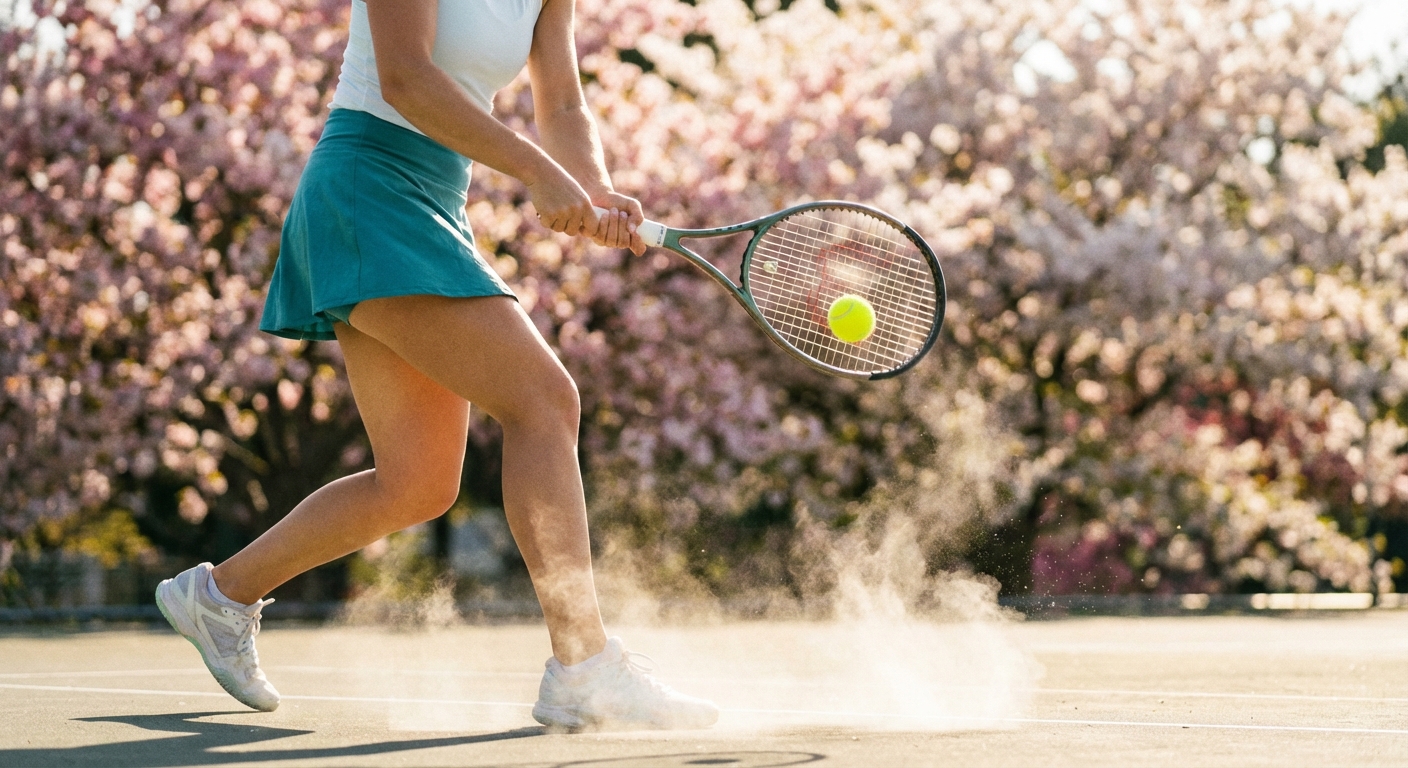
1. Why Spring Tennis in "March"?: The Correlation Between Climate and the Human Body
While tennis is a sport you can enjoy all year round, sports medicine experts unanimously agree that "outdoor tennis in March" is the ultimate medicine. There are clear scientific and environmental reasons for this.
The Magic of 15°C (59°F): Reduced Injury Risk and Optimal Calorie Burn
Our muscles and ligaments are highly sensitive to temperature. In freezing winter weather, blood vessels constrict and muscles stiffen, making it easy to sustain severe injuries like hamstring or Achilles tendon tears even during simple changes in direction.
However, the average March temperatures of 10°C to 15°C (50°F to 59°F) create a "Goldilocks Zone" where the human body can efficiently release heat generated during exercise while maintaining optimal muscle elasticity. Because it's neither too cold nor too hot, muscle plasticity is maximized, dropping the risk of injury to its lowest point of the year.
Additionally, outdoor workouts during this season boost your basal metabolic rate by about 10-15% compared to indoor exercises. Your body starts burning brown fat to maintain proper body temperature, which, combined with the natural interval training effect of tennis, burns a massive average of 600-800 kcal per hour.
Beating Seasonal Affective Disorder (SAD): A Symphony of Sunlight and Serotonin
During winter, we suffer from an absolute lack of sunlight. This causes an imbalance between melatonin, which regulates sleep, and serotonin, the happiness hormone, leading to "Seasonal Affective Disorder" (SAD). This is exactly why you might feel tired for no reason and crave sweets.
Keeping a rally going under the warm spring sun of March is the most surefire cure for the winter blues. When your skin meets UV rays and begins synthesizing Vitamin D, your brain immediately increases serotonin production. The moment of "flow" when focusing on the ball during tennis drastically lowers cortisol (stress hormone) levels, providing excellent mental health benefits.
2. Three Medical Benefits of Tennis That Transform Your Body (Data & Evidence)
You might think, "Aren't all exercises pretty much the same? Is tennis really that special?" However, research from international sports medicine journals proves the overwhelming superiority of racket sports.
① 56% Reduction in Cardiovascular Disease Incidence and Mortality
According to a large-scale follow-up study of 80,000 people conducted by the British Journal of Sports Medicine, those who enjoy racket sports like tennis had a staggering 56% lower cardiovascular mortality rate and a 47% reduction in all-cause mortality compared to those who did not exercise.
These figures dominate those of running, swimming (28%), and aerobics (27%). This is because tennis is a "natural High-Intensity Interval Training (HIIT)" that combines short, powerful anaerobic sprints across the court with aerobic recovery while catching your breath between points. It is the most effective training method for strengthening the heart muscle.
② Enhanced Brain Plasticity: A Moving Game of Chess
Tennis is not just physical labor. You have to predict the ball's trajectory and spin within 0.1 seconds just by looking at the angle of your opponent's racket, all while calculating wind direction and court surface. I often compare tennis to "playing chess with your body."
This complex, spatio-temporal cognitive task strongly stimulates the brain's hippocampus and frontal lobe. According to neuroscientists, continuous tennis activity maximizes "brain plasticity," which creates new neural connections (synapses), thereby preventing early-onset dementia and drastically improving focus and working memory in daily life.
③ The Secret to Increasing Bone Density: Wolff's Law
According to "Wolff's Law," bones have a property of increasing their own density and hardening to resist physical pressure applied to them. While cycling or swimming are great for cardiopulmonary function, they lack the weight-bearing impact needed to significantly increase bone density.
On the other hand, tennis requires constant pushing off and jumping from the ground, and the heavy impact of striking the ball transfers through the arm and upper body into the torso. These continuous and appropriate impacts stimulate osteoblasts, making your bones as strong as steel. There is no better prescription, especially for preventing osteoporosis in middle-aged and older adults.
3. Making 100% Use of the Guri Tennis Association Infrastructure (A Firsthand Review)
Having personally visited and experienced the local courts and events hosted by the Guri Tennis Association, I found that it provides the optimal environment for both tennis beginners and seasoned players.
Systematic Management and Accessibility: Wangsukcheon Citizens' Park Tennis Courts
Guri City is home to numerous well-maintained courts, including the Wangsukcheon Citizens' Park and the Guri Civic Sports Center. In spring, the cherry blossoms blooming around the courts and the gentle river breeze elevate the quality of your workout to another level.
I vividly remember swinging a racket here for the first time last March. The pleasant hard court surface, proper lighting facilities, and above all, the warm and welcoming atmosphere of the clubs under the Guri Tennis Association, where even beginners can easily fit in, left a lasting impression. The inclusive culture that values good manners and helping each other fix their posture greatly lowers the barrier to entry for newcomers.
A Hub for Networking and Tournament Experiences
To welcome the spring season, the Guri Tennis Association hosts various tournaments for different skill levels. You might think, "Aren't tournaments only for pros?" However, the Guri Association thoughtfully operates separate beginner categories for "Tennis Rookies," allowing anyone to gain match experience.
The sense of belonging and solidarity you feel while syncing up with your partner in preparation for a tournament is a massive charm of racket sports that you simply cannot experience alone.
4. [Must Save] A 10-Minute Warm-Up Guide for Injury-Free Spring Tennis
No matter how great the environment or how fit your body is, stepping onto the court without a warm-up is like pouring boiling water into a cold glass. Here is the "1-Degree Core Temp Boost Dynamic Stretching Routine," heavily emphasized by the coaching staff of the Guri Tennis Association. Screenshot this and make sure to do it as soon as you arrive at the court.
| Step | Exercise Name | How to Perform & Tips | Target Muscles |
|---|---|---|---|
| 1 | Arm Circles | Extend arms and slowly rotate forward 10 times, backward 10 times (essential before picking up your racket) | Shoulder Rotator Cuff, Pectorals |
| 2 | Walking Lunge & Twist | Lunge forward and twist your torso toward the front leg (10m round trip) | Hip Joints, Core, Quadriceps |
| 3 | High Knees | Jog lightly in place while bringing your knees up to chest height (30 seconds) | Heart Rate Increase, Hamstrings |
| 4 | Calf Raises & Bounces | Raise and lower heels to contract calves, followed by light bounces in place | Achilles Tendon, Calves |
Static stretching (stretching and holding still) should be saved for your cool-down after your workout. Before exercising, doing dynamic stretching—as shown in the table above—to increase your joints' range of motion and gradually raise your heart rate is the key to preventing injuries.
5. The Completion of Full-Body Core Muscles: Understanding the Kinetic Chain
It’s a huge misconception to think tennis is played only with the arms. A great tennis forehand starts from the tips of your toes. The power of your lower body pushing against the ground translates into pelvic rotation; this torque travels through the core (abdominals and erector spinae), into the shoulder, arm, and finally out to the tip of the racket. In sports science, this is known as the "Kinetic Chain."
Take a close look at the form of advanced players in the Guri Tennis Association. The reason they can hit cannonball-like shots without forcing power from their arms is that they perfectly utilize the rotational force of their core. Therefore, even if you just play tennis consistently twice a week for the three months of spring, your back and abdominal core muscles will strengthen exponentially, allowing you to enjoy the added benefit of correcting bad posture like a hunched back or forward head posture (text neck).
6. Nutritional Replenishment: Dietary Tips to Boost Your Spring Tennis Efficiency by 200%
When enjoying a high-energy-consuming sport like tennis, your nutrition intake must be strategic. About two hours before hitting the court, it’s best to consume complex carbohydrates (like sweet potatoes or oatmeal) to stock up your muscle glycogen stores.
During the match, rather than just plain water, you should drink electrolyte-infused sports drinks or slightly salted water to replenish the sodium and potassium lost through sweat, which prevents muscle cramps. Since March has a large temperature variance between day and night, you might experience a sudden drop in stamina when your sweat cools. We highly recommend adopting the routine of pro players: keep a banana on the bench and take a bite during every court changeover.
7. Unfold Your Spring Court with Dreams (꿈을담아)
So far, we've explored the endless advantages and health benefits of spring tennis in March with the Guri Tennis Association. Breaking physical limits, blowing away stress, and connecting with new people—tennis goes beyond a simple hobby; it will positively transform your entire lifestyle.
However, if you're thinking of hitting the back button and giving up due to worries like, "Which racket should I buy?", "How do I find a tennis partner or club in Guri that fits me?", or "Where do I even start with lessons?", don't worry.
Rooting for Your First Serve 🎾
Our "Dreams (꿈을담아)" service is here to help you successfully kickstart your tennis life. We offer a one-stop solution ranging from location-based tennis partner matching and connecting you with top-tier coaches certified by the Guri Tennis Association, to equipment consulting tailored for beginners.
Hesitation only delays your time getting onto the court. This spring, don't stay trapped indoors anymore. Download the Dreams (꿈을담아) app right now, and experience free tennis matching and consulting near you!
We hope your spring days shine brightest on the court. See you this weekend at the Wangsukcheon tennis courts!