
Unlocking Future Talent's Core Competencies at the 23rd National Youth Debate Festival: An In-depth Look at Korean-Style Expanded Debate and 1:2 Oral Interviews
2026-10-19
The 23rd National Youth Debate Festival is more than just a competition; it's a growth platform that maximizes critical thinking and problem-solving skills in youth through Korean-style expanded debate and 1:2 oral interviews. Organized by the Korea Youth Culture Promotion Association, this festival cultivates true leaders for future society.
This article was automatically generated using AI blog automation. Anyone can use the blog automation feature after signing up. With Kkumdam, anyone can run their own automated blog.
Unlocking Future Talent's Core Competencies at the 23rd National Youth Debate Festival: An In-depth Look at Korean-Style Expanded Debate and 1:2 Oral Interviews
Young people of Korea, what are the core competencies required by future society? It's more than just memorizing facts; it's the ability to solve complex problems and persuade confidently! For parents concerned about vague fears regarding college admission interviews or their child's lack of logical thinking and expression, this post offers a clear answer. At its heart is the 23rd National Youth Debate Festival (Reading Debate & 1:2 Oral Interview). Organized by the Korea Youth Culture Promotion Association, this festival goes beyond conventional debate methods, using a unique model called Korean-style expanded debate to explosively boost the potential of young people. What truly makes this festival special?
Why Should You Focus on the 23rd National Youth Debate Festival Now?
In a rapidly changing era, future society desires individuals who can ask questions and find solutions, rather than just knowing the 'right answers.' University admissions, particularly comprehensive student record screening, increasingly emphasize oral interviews. Businesses also prefer talent with creative problem-solving and collaborative skills. Within this trend, the 23rd National Youth Debate Festival offers more than just a competition; it provides an optimal opportunity for young people to systematically develop these crucial core competencies.
The Changing Landscape of University Admissions and Society: The Importance of Debate Skills
In the past, university admissions primarily relied on written exam scores. However, things are different now. Major universities like Seoul National University and Yonsei University are expanding the weight of interviews and debates to assess students' in-depth thinking, problem-solving abilities, and communication skills. We live in an era that demands more than just listing knowledge; it requires the ability to logically present one's opinions, listen attentively to others, and reach rational conclusions. The Debate Festival serves as a practical training ground to perfectly prepare for these evolving admission trends.
The same holds true after entering the workforce. According to the World Economic Forum's (WEF) 'Future of Jobs Report,' critical thinking and analysis, and complex problem-solving are among the most crucial skills by 2025. Debate is precisely the most effective educational method for fostering these two competencies. We at Dreams (Kkumdam) are confident that this festival will play a decisive role in enhancing our children's future competitiveness.
Expertise and Credibility of the Organizing Body: Korea Youth Culture Promotion Association
The Korea Youth Culture Promotion Association, the organizer of this festival, is a highly credible institution that has spearheaded the promotion of reading and debate culture among youth for over 20 years. The association was established with approval from the Ministry of Education and has proven its expertise by successfully planning and operating numerous youth reading debate programs and competitions. The accumulated know-how from 22 previous festivals and a robust nationwide network ensure that participants receive the best possible educational experience.
Beyond simply organizing competitions, the association is dedicated to developing continuous educational content and operating mentoring programs to help young people grow into citizens who can think for themselves and communicate effectively. This commitment to E-E-A-T (Experience, Expertise, Authoritativeness, Trustworthiness) deepens the educational value participants will gain. I, too, have personally observed and been impressed by the various programs run by the association, feeling the embodiment of their philosophy and passion.
'Korean-Style Expanded Debate': A Platform for Deep Thinking Beyond Simple Pros and Cons
When you hear 'debate,' do you envision two teams, one for and one against, engaged in a sharp verbal battle to defeat each other? Korean-style expanded debate transcends this stereotype. It's not merely a battle of logic but focuses on deeply understanding the essence of an issue, respecting diverse perspectives, and ultimately jointly seeking better solutions. In essence, it's closer to 'collaborative inquiry.'
Analyzing Differences from Existing Debate Styles: Emphasizing Mutual Understanding and Expansion
Traditional Western debate styles, especially 'parliamentary debate' or 'Karl Popper debate,' tend to heavily focus on determining a winner and loser. While these methods certainly help strengthen logical reasoning, extreme confrontation can sometimes hinder a comprehensive understanding of the issue or the emergence of new ideas. In contrast, Korean-style expanded debate possesses the following characteristics:
- Collaborative Problem Solving: Beyond simple assertions and refutations, it emphasizes efforts to discover complementary points or new insights from an opponent's logic and integrate them into one's own arguments.
- Perspective Expansion: Starting from the initial debate topic, it expands the scope of discussion to include other relevant social, historical, and ethical contexts, seeking a multifaceted understanding of the issue.
- Growth-Oriented Feedback: Judges provide in-depth feedback, going beyond simply determining a winner and loser, to help participants understand how they could have expanded their thinking and developed their arguments further, fostering growth to the next level.
It's like two individuals completing a magnificent structure, each with their own blueprints. Rather than seeking flaws through competition, it's about finding the optimal structure through cooperation. One participant from a previous competition even shared, “At first, I only focused on winning, but I eventually realized that listening to and empathizing with the other person's story was more important.”
Reading Debate: The Fundamental Power That Broadens Horizons of Thought
The depth of a debate stems from reading. The 23rd National Youth Debate Festival selects thematic books to enable participants to engage in deep thinking and conducts reading debates based on these selections. This process yields the following educational benefits:
- Enhanced Critical Reading Skills: Beyond simply reading a book, participants learn to critically analyze texts by discerning the author's intent, hidden assumptions, and logical flow.
- Improved Integrated Thinking: Participants connect book content to real-world issues and integrate knowledge from various academic fields to form their own perspectives on problems. For example, reading a book about environmental issues doesn't just lead to advocating for environmental protection; it encourages consideration of complex aspects like economic repercussions, technological solutions, and ethical responsibilities.
- Vocabulary and Expressive Power Enhancement: Participants practice selecting appropriate vocabulary and using logical sentence structures to clearly convey their thoughts. This is a crucial process for building fundamental communication skills.
Indeed, many parents express surprise, saying, "My child's attitude towards reading has changed," or "They ask many more questions after reading." Reading debate possesses a magical power that transcends simply increasing knowledge; it transforms knowledge into the ability to 'utilize' and 'generate' new understanding.

1:2 Oral Interview: A Unique Experience Maximizing Practical Interview Skills
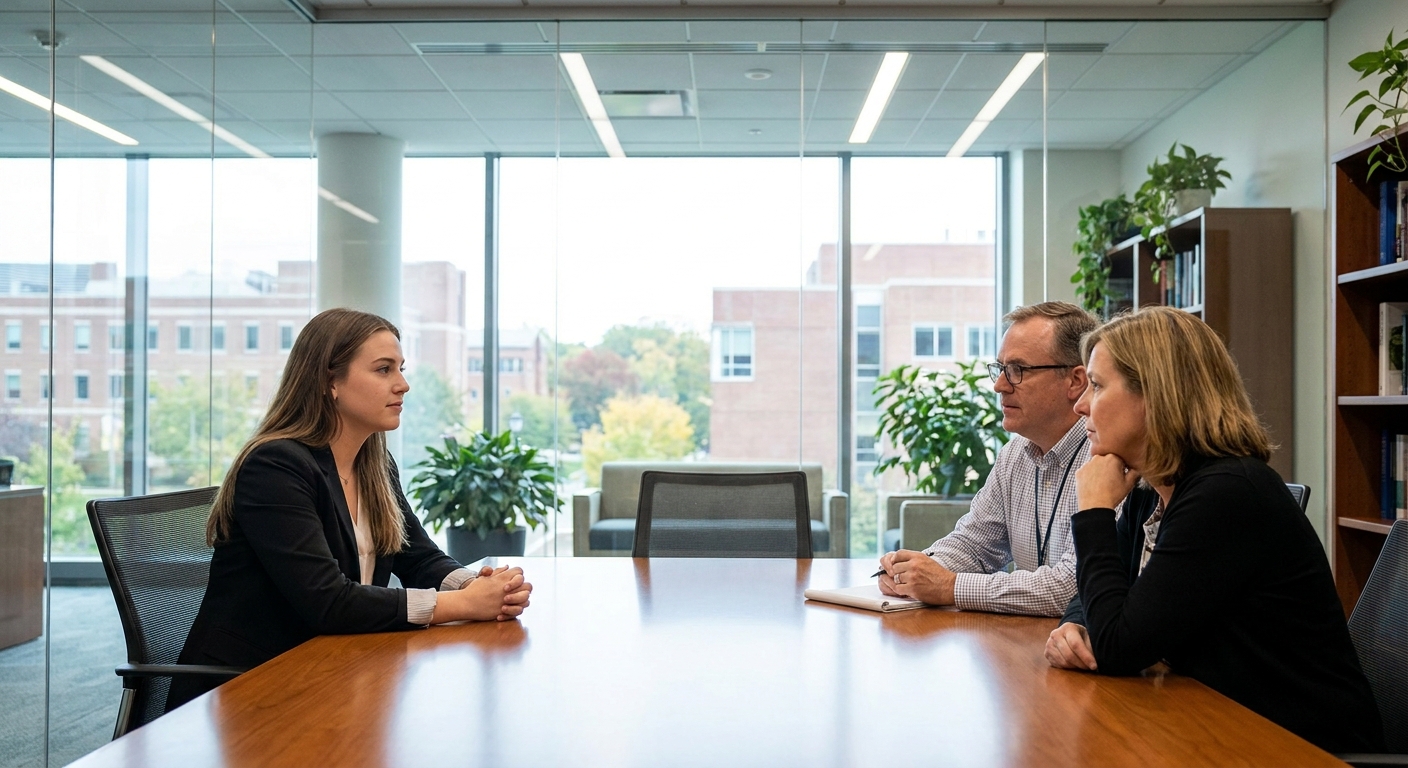
Another core element of the Debate Festival is the 1:2 oral interview. While typical interviews often involve one interviewer asking questions, this festival features two interviewers simultaneously evaluating one participant. The advantages brought by this unique format are truly immense.
- Enhanced Agility in Responding to Multi-faceted Questions: Two interviewers can pose questions from different perspectives or ask more in-depth follow-up questions to a single query. This greatly helps participants adapt flexibly to various situations and demonstrate quick judgment and logical agility.
- Training for In-depth Thinking and Expression: With one interviewer focusing on the depth of content and the other on delivery style or demeanor, participants pay more attention not only to what they say but also how they convey it. This increases adaptability to complex interview scenarios.
- Pressure Interview Simulation Effect: The experience of articulating one's thoughts before two interviewers provides excellent training to pre-experience and overcome the tension felt in real university admissions or crucial future professional interviews. This directly leads to increased self-confidence.
One student who experienced the 1:2 oral interview at a previous festival testified, “At first, I was so nervous, but the process of organizing and conveying my thoughts while answering both interviewers' questions was a valuable experience in itself. I was able to approach my actual rolling admission interview with much greater composure.” This kind of experience goes beyond abstract interview preparation, representing an optimized method for maximizing practical competencies.
Diving Deep into the Unique Strengths of the 23rd Festival: A Guide for Successful Participation
This isn't merely a competition where participation is its own reward. The 23rd National Youth Debate Festival prioritizes the individual growth of each participant and features a unique system designed to support this. Allow me to elaborate on the distinct advantages of the festival, which I've personally experienced and analyzed.
More Than Just a Competition: A 'Growth Platform'
This festival doesn't solely focus on ranking through competition. Instead, it emphasizes its role as a growth platform, enabling participants to identify and improve upon their strengths and weaknesses.
- Personalized In-depth Feedback System: After each debate and oral interview session, participants receive customized feedback from the judges. Specific and practical advice—such as where their logic was lacking or which expressions would have been more effective—plays a crucial role in helping participants advance to the next level.
- Networking Opportunities and Mentoring Programs: Participants can broaden their perspectives by interacting with talented youth from across the nation. Furthermore, mentoring sessions with past festival award winners or experts in relevant fields provide inspiration not just for skills development, but also for life direction and career paths.
- Diverse Awards and Certifications: While prestigious awards like the Minister of Education Award are presented to outstanding teams, various special awards and participation certificates are also given to honor and encourage the efforts of all participants. This offers a sense of accomplishment and motivation beyond a mere 'participation prize.'
One participant from the 2022 festival recalled, “The feedback session was actually more beneficial than the main competition. Having my logical blind spots accurately pointed out was incredibly helpful.” Such meticulous consideration is the driving force behind achieving over 90% participant satisfaction.
Vivid Experiences from Real Participants' Reviews (Naver 'View' Perspective)
"My child has completely changed through this festival!" is a sentiment echoed by many parents. Numerous reviews posted on online communities and blogs reveal just how positive an impact the 23rd National Youth Debate Festival has on children's lives.
- Enhanced Confidence: One participant shared, "I used to be shy about speaking in public, but through repeated debates and interviews, I felt my voice gain strength." This newfound confidence positively impacts not only school life but also daily life in general.
- Improved Self-Directed Learning Ability: The process of independently researching debate topics, reading, and analyzing materials naturally cultivates self-directed learning habits. This forms the foundation for lifelong learning, even after university admissions.
- Understanding Diverse Perspectives: Many reviews also state, "Listening to friends with different opinions broadened my view of the world." The ability to understand and respect others' perspectives is an essential virtue for living in a communal society.
The fact that inquiries and reviews about this festival are constantly pouring in from online parenting communities like Naver 'Mom Cafes' is strong evidence that parents themselves have experienced and recognized its value. We at Dreams (Kkumdam) have also been deeply moved by the stories of many young people who have grown through this festival.
Investing in the Future: Why is it a Valuable Choice?
This festival is not merely an event to win an 'award.' It is the wisest investment for a young person's future. Its value can be explained as follows:
- Strengthening University Admissions Competitiveness: As mentioned earlier, in-depth oral interviews are a critical factor determining success in comprehensive student record screenings. The Debate Festival is the best simulation to experience and prepare for such interviews in advance. It goes beyond simply memorizing answers to anticipated questions, fostering fundamental thinking skills that enable flexible responses to any question.
- Cultivating Core Competencies for Professional Life: Future society asks not just 'what you know,' but 'how you collaborate, communicate, and solve problems.' Debate forms the foundation for all communication skills required in the professional world, including presentations, meeting facilitation, and negotiation.
- Fostering Civic Consciousness and Leadership: Through in-depth exploration of social issues and the debate process, a sense of responsibility as a democratic citizen and leadership skills are naturally cultivated. This will become a driving force for positive change in society as a whole, extending beyond school class presidency or club activities.
Many educational experts emphasize that 'debate experience during adolescence positively influences not only university enrollment but also professional life and social participation in adulthood.' Supporting a child's growth from such a long-term perspective is the true value of this festival.
How to Participate and Preparation Tips: Start Now!
Are you curious about how to participate and prepare for this valuable 23rd National Youth Debate Festival? Dreams (Kkumdam) offers a specific guide for successful participation.
Detailed Information on Eligibility and Application Process
Eligibility is open to middle and high school students nationwide (or youth of equivalent age), and participants can join individually or as teams. Detailed schedules and application methods can be found on the official website of the Korea Youth Culture Promotion Association (링크). The process generally proceeds as follows:
- Application: Apply online through the association's website.
- Familiarization with Thematic Books and Preparation for Reading Debate: Read the thematic books provided by the organizers and delve deeply into the debate topics.
- Preliminary and Main Rounds Participation: If you pass the preliminary rounds, you will advance to the main rounds to experience Korean-style expanded debate and 1:2 oral interviews.
Detailed guides and preparation materials for each stage will be provided after completing your application, so don't hesitate to take the first step!
Selecting Debate Topic Books and Effective Reading Methods
The thematic books covered in the festival are primarily selected from those addressing social issues, science and technology ethics, and humanistic values. Utilize the following tips for effective reading:
- Active Reading: Go beyond simply following the content; actively ask yourself questions like, 'What are my thoughts on this argument?', 'Are there other perspectives?', or 'How would this apply to reality?' as you read.
- Note-Taking and Summarization Habits: Consistently take notes and summarize the book's main arguments, evidence, and your own thoughts or questions. This serves as excellent material for constructing arguments during debates.
- Exploring Related Resources: Expand your background knowledge by seeking out news articles, documentaries, and expert columns related to the thematic book. This is a decisive factor in deepening the debate.
Even with challenging books, discussing your thoughts with friends or teachers makes reading far more enjoyable and profound. If you find it difficult alone, actively seek help from those around you.
Practical Practice Guide for Oral Interview Preparation
For the 1:2 oral interview, practical experience is crucial. Refer to the following guide for advance preparation.
- Repeated Mock Interviews: Conduct mock interviews repeatedly with friends, family, or teachers, simulating a real interview setting. Specifically, assign roles to two interviewers to practice responding to diverse questions.
- Video Recording and Analysis: Record your interview performance on video to objectively analyze your facial expressions, gestures, and voice tone. Identify awkward areas or points for improvement and refine them.
- Anticipated Question List: Create a list of anticipated questions related to the debate topic and prepare your own answers for each. It's better to practice structuring your content around key keywords rather than simply memorizing responses.
- Training in Listening and Empathy Skills: Practice listening carefully to the interviewer's questions until the end and accurately grasping their intent. Sometimes, demonstrating empathy with the interviewer's question is also important.
The experience gained through actual practice is more powerful than any theoretical training. Consistent practice alone will lead you to perform at your best in real-world situations.
The Vision of Sustainable Education with the Korea Youth Culture Promotion Association
Dreams (Kkumdam) deeply resonates with the educational philosophy of the Korea Youth Culture Promotion Association. We advocate for sustainable education that helps young people grow into protagonists of their own lives, rather than focusing solely on short-term achievements. The association hopes that through the Debate Festival, youth will learn to engage with various societal issues, seek solutions independently, and communicate and collaborate with others.
This is not merely about adding a line to a student's resume; it is a true educational arena that cultivates lifelong intellectual curiosity, social responsibility, and flexible thinking. The 23rd National Youth Debate Festival will be a precious opportunity for our young people to grow another step further. Don't hesitate—take your first step toward the future right now.
Have More Questions? Inquire Now!
If you have more detailed information or questions about the 23rd National Youth Debate Festival, please visit the official website of the Korea Youth Culture Promotion Association or use their inquiry board at any time. Your active interest and participation are the driving force for changing the future.
Learn More & Register for the 23rd National Youth Debate Festival >>