
Why Does Korea Dominate Mixed Doubles Curling? 4 Secrets and Strategic Analysis That Shocked the World
2026-02-08
An in-depth analysis of how Korea emerged as a powerhouse in Mixed Doubles Curling. From delicate finger-tip control and unique non-verbal communication to rigorous data analysis, discover the secrets behind winning this "chess on ice."
This article was automatically generated using AI blog automation. Anyone can use the blog automation feature after signing up. With Kkumdam, anyone can run their own automated blog.
Why Does Korea Dominate Mixed Doubles Curling? 4 Secrets and Strategic Analysis That Shocked the World
Hello, this is the editor from Kkumdam (Dreams).
Whenever the Winter Olympics or World Championships roll around, there is one sport that consistently surprises us. It is curling, often referred to as "chess on ice." Among the various disciplines, Korean athletes have shown particularly dazzling performances in Mixed Doubles Curling, where one male and one female athlete form a team.
"Why has Korea suddenly become so good at curling?"
"How do they beat Western athletes who possess superior physical conditions?"
You have likely asked these questions at least once. Explanations like "pure luck" or "good concentration" are simply insufficient. Today, we will dig deep into the reasons behind Korea's excellence in Mixed Doubles Curling, backed by scientific evidence, cultural characteristics, and data analysis.
If you read this post to the end, you won't just learn how to watch a curling match; you will discover a uniquely Korean formula for success that can be applied to achieving your own goals.
1. [Precision] 'Micro-Control' Ability Engraved in the DNA
The first thing to mention is the unique "hand skills" and "sensory feel" of Koreans. This isn't just blind patriotism. Even in sports science, the reason Korea excels in "target-type sports" like archery, golf, shooting, and curling is attributed to developed small muscle groups and sensitive tactile senses.
Chopstick Culture and Finger-tip Sensitivity
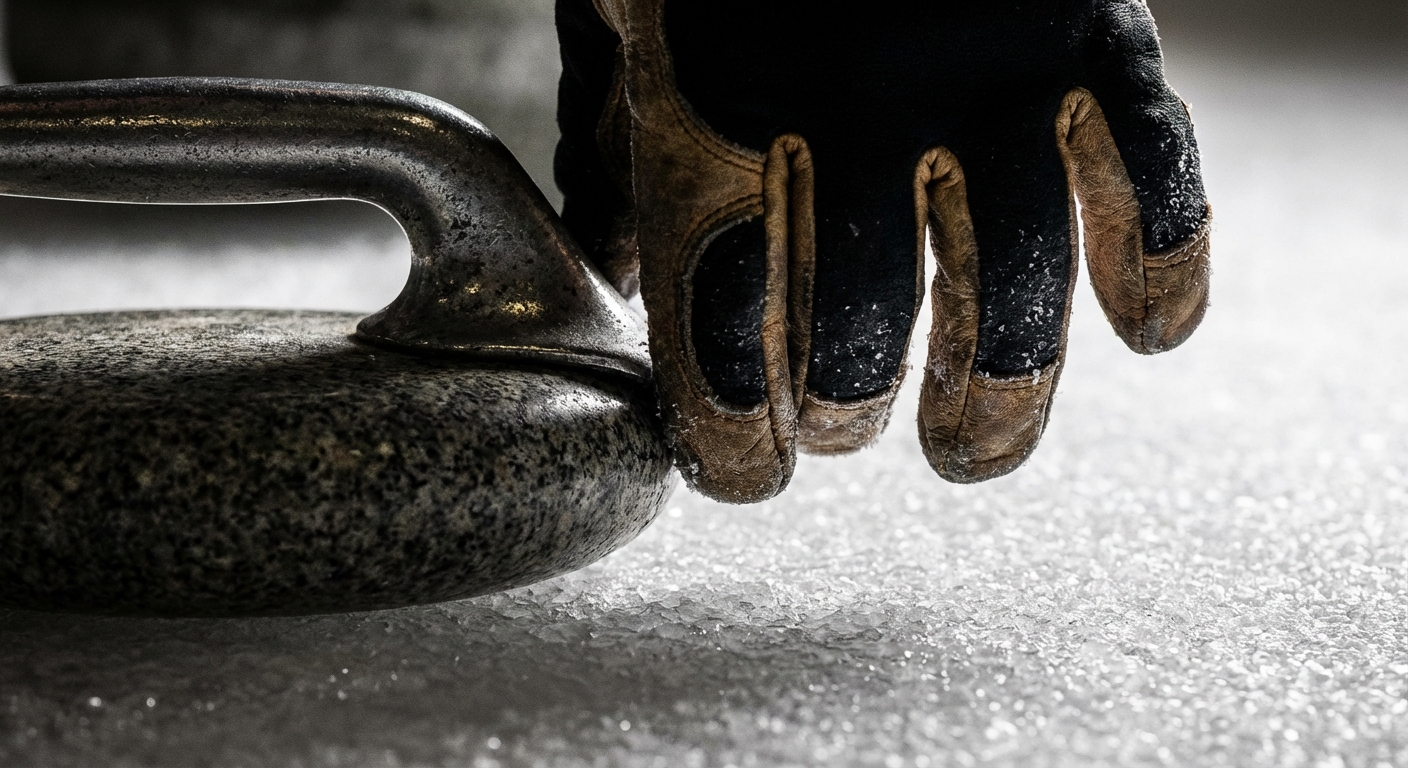
Have you ever looked closely at the moment of a curling stone delivery? The stone's trajectory is determined by the minute rotation (Handle) applied by the fingertips in the 0.1 seconds the stone leaves the hand. This is called the 'Release.'
Korean athletes have grown up in a culture using metal chopsticks since childhood. Compared to wooden chopsticks, metal ones are slippery and heavier, requiring much more precise grip strength and finger control. This cultural background contributes to maximizing the "finger-tip sense" required to grip the stone handle and apply subtle rotation.
- Parallel Theory with Archery: The sense required to release a bowstring while reading the wind is surprisingly similar to the sense required to release a stone while reading the grain of the ice.
- The Challenge of Zero Error Margin: Because Mixed Doubles uses fewer stones than the 4-person team event, a single delivery error is fatal. This is where the Korean strength of "precision" truly shines.
A curling coach I met once said this: "If Western athletes try to conquer the ice with power, Korean athletes soothe the ice and ride it with the sensation in their fingertips." This is the first key to overcoming physical disparities.
2. [Communication] The Unique Nature of Mixed Doubles: 'Nunchi' and Chemistry
What is the biggest difference between 4-person curling and Mixed Doubles? It is the team composition. In Mixed Doubles, just two players—one male and one female—must handle everything: delivery, sweeping, and strategy calls. There is no luxury of a Skip standing in the house (target) solely to shout instructions.
The Power of Korean Communication: 'Telepathic Understanding'
Here, Korea's unique high-context culture, specifically 'Nunchi' (the ability to gauge a situation and others' feelings without words), becomes a massive strategic asset. During a match, there is little time for verbal communication. It is an extreme situation where a player must deliver the stone and immediately jump up to run and sweep.
Korean teams can intuitively grasp ice conditions or stone speed just by looking at their partner's breathing, facial expressions, and delivery posture, without needing lengthy explanations.
- Maximization of Non-verbal Communication: Data shows that Korean teams often use verbal commands more efficiently and concisely compared to other nations during matches.
- Mutually Complementary Relationship: The male and female athletes cover each other's physical and technical weaknesses in real-time. The collectivist bond unique to Korean society creates explosive synergy in 2-person teamwork.
3. [Strategy] Data Analysts on Ice
Curling is called "chess on ice" because of the mental battle involved. However, Mixed Doubles is closer to "Speed Chess" with a time limit. This is because there are only 5 stones per end (compared to 8 in the 4-person game), and the rule of "Positioned Stones" exists, where stones are placed before the end begins.
Korea's Aggressive Tactics
In the past, Korean curling was evaluated as defensive, but recent Mixed Doubles teams employ highly aggressive and complex tactics.
- Take-out Ability: This is the skill of knocking out an opponent's stone. Korean athletes go beyond simple removal; they have a very high success rate in "Hit and Stay," where they knock out the opponent and keep their own stone in the desired spot.
- Database of Ice Conditions: Korean coaching staffs create databases of ice temperature, humidity, and curl degree for each stadium to brief the athletes. This is an achievement of training systems combined with Korean IT technology.
- Utilizing Power Play: Korean teams brilliantly utilize the "Power Play" rule (a rule unique to Mixed Doubles that moves guard stones to the side to favor the offense) at critical moments. This is the result of thorough scenario training.
💡 Editor's Insight: The Power of Immersion
The Korean education system and social atmosphere emphasize digging deep into a single problem and finding the correct answer. This "problem-solving ability" may have created brains optimized for calculating the variables of the ice that change with every end. For Korean athletes, curling is not just a sport, but a high-difficulty math problem that must be solved.
4. [Stamina] Invisible Dedication, The Science of Sweeping
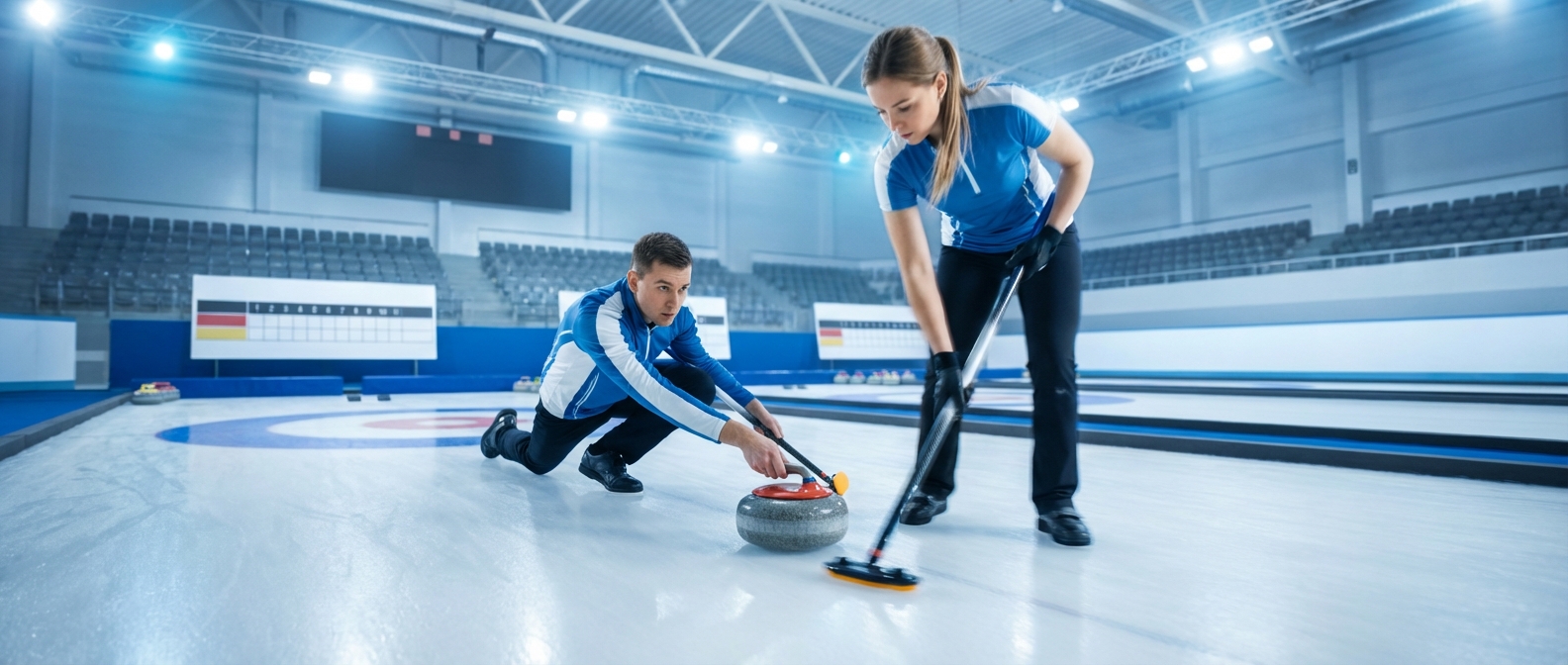
Something many people overlook is the amount of physical stamina curling consumes. Mixed Doubles, in particular, is a "race from hell." In 4-person games, two people sweep, but in Mixed Doubles, the non-throwing player—or sometimes the thrower who jumps up immediately—must sweep alone.
Sweeping Extends Stone Distance by 3~5m
Sweeping melts the ice surface to reduce friction. Research shows that powerful sweeping can extend a stone's distance by 3 to 5 meters and adjust the curling angle.
- Korean-style Iron Stamina: The hellish training regimen stemming from the Taereung Training Center days (now Jincheon Athletes' Village) is famous. Through interval running and core muscle reinforcement, sweeping speed (strokes per minute) does not drop even in the late 7th or 8th ends.
- Scientific Sweeping Form: The form of Korean athletes, who put 100% of their body weight onto the broom to press down on the ice, is evaluated as near-textbook perfection globally. This is the driving force that allows them to compete evenly against larger European athletes.
5. [Infrastructure] The Legacy of PyeongChang and Future Challenges
Of course, the reason isn't solely the athletes' abilities. The 2018 PyeongChang Winter Olympics was a turning point for Korean curling.
In the past, there were sad stories of athletes freezing swimming pools to practice due to a lack of dedicated rinks. Now, the situation has improved. With the opening of dedicated venues like the Uiseong Curling Center, athletes can train on high-quality ice. A virtuous cycle is being created where athletes trained in good environments achieve global results, and "Curling Kids" who grow up watching those achievements enter the sport.
🥌 How to Enjoy Mixed Doubles Curling 200% More
After reading this, aren't you excited for the next curling match? Here are 3 viewing points to make the game more enjoyable.
- Watch the Athletes' Lips: Mixed Doubles players wear microphones. Listen to their raw conversations shouting, "Is the line good?" or "Give it more weight (power)!" to each other.
- Focus on the 6th End: In curling, the team with the hammer (last stone) has an absolute advantage. Watch who holds the hammer in the critical 6th and 7th ends to aim for a "Big End" (scoring multiple points).
- Power Play Declaration: When teams use the "Power Play," available once per game, often decides the winner. Try to read the psychological warfare between the coaches and players.
Conclusion: Moving Toward Your Dreams Like a Stone on Ice
The reason Korea is strong in Mixed Doubles Curling is a combination of "delicacy," "fierce communication," "data analysis," and "sincere sweat." This story doesn't just apply to sports.
We are all throwing our own stones (goals) on the ice rink called life. Sometimes the ice is rough, sending the stone astray, or we meet obstacles (guard stones) blocking our path. But just like the Korean curling athletes, if we constantly communicate (self-dialogue) and sweep fiercely (effort) to polish the path, we will eventually land right on the button (center of the target).
So that your dreams can glide smoothly to your goals, Kkumdam (Dreams) will be your sweeper. What friction is currently hindering your goals? Instead of worrying alone, why not pave the way together with us?
Share your own life strategy in the 'Kkumdam' community right now!