
Why MacBooks Are Worth It: The Real Reasons They're Optimized for Video Editing & App Development (ft. 3-Year Review)
2026-03-04
Why do professionals insist on expensive MacBooks? From superior display quality to a developer-friendly ecosystem, we analyze the specific reasons why you should choose a MacBook based on real-world data and experience.
This article was automatically generated using AI blog automation. Anyone can use the blog automation feature after signing up. With Kkumdam, anyone can run their own automated blog.
Why MacBooks Are Worth It: Superior Video Quality & Seamless App Development
"For that price, couldn't I buy two high-end Windows laptops?"
Are you currently hesitating in front of the purchase button with this thought in mind?
I had the exact same dilemma three years ago. I insisted on Windows laptops, focusing on cost-effectiveness. However, as my video editing workload increased and I joined app development projects, I eventually switched to a MacBook. To give you the conclusion first: I became convinced that "this isn't just a luxury item, but a tool that buys you time."
If you searched for 'Why MacBooks are good', you likely have practical questions about 'video quality' and 'app development efficiency', rather than just curiosity about its pretty design.
In today's post, instead of abstract praise, I will thoroughly analyze why the MacBook is an irreplaceable choice for creators and developers based on data and experience from the field. By the time you finish reading, your worry will likely shift from "Should I buy it?" to "Which specs should I choose?"
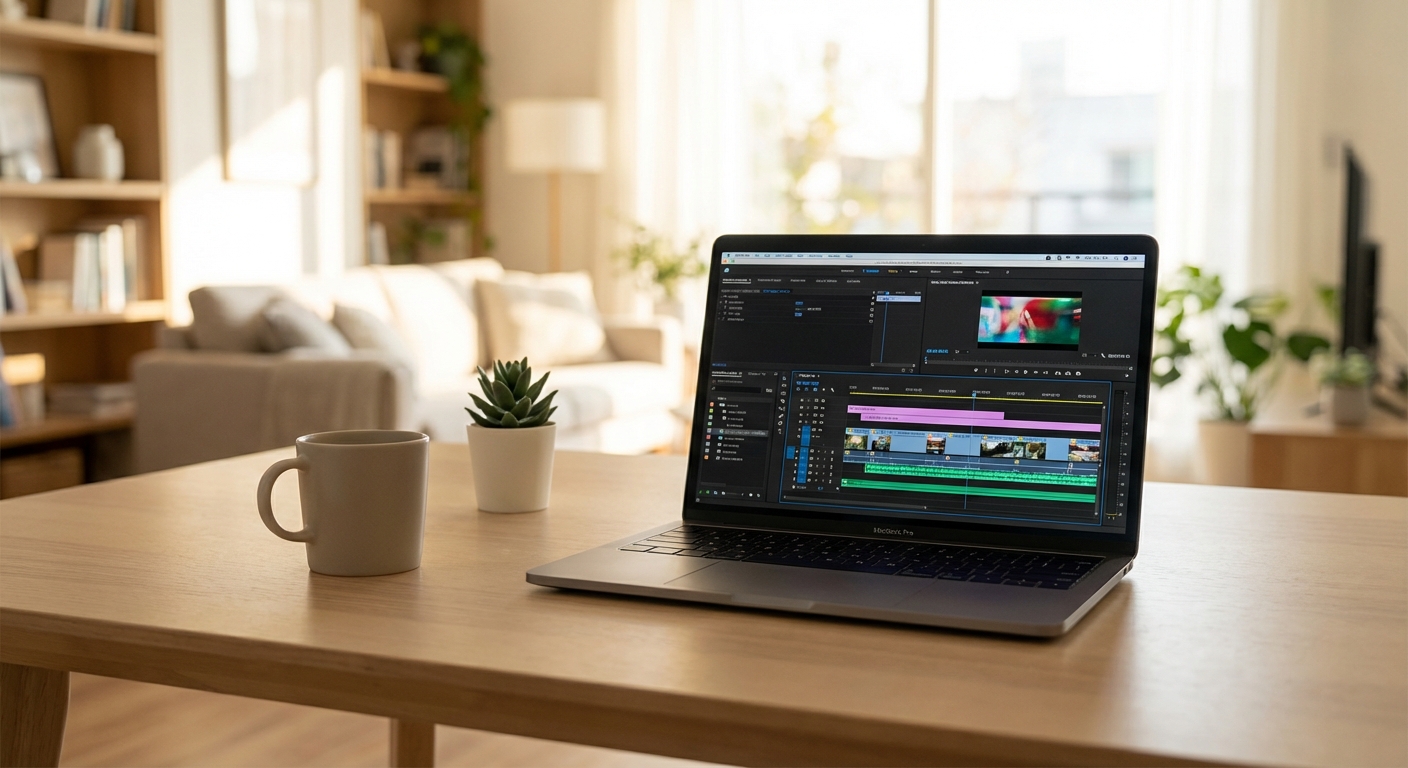
1. Why Video Looks Good: It Shows 'True' Colors Comfortable for Your Eyes
The first shock you feel when you turn on a MacBook is undoubtedly the display. Simply saying "the picture quality is good" isn't enough. let's break down technically why MacBook video looks better and is advantageous for editing work.
(1) P3 Wide Color Gamut: The 25% of Colors We Were Missing
Standard monitors use a color standard called sRGB. However, the MacBook's Retina display supports the P3 Wide Color Gamut. What's the difference?
Simply put, if sRGB displays 100 colors, P3 displays 125. It shows much deeper and richer colors, especially in the Red and Green spectrums. When editing travel vlogs, I felt a thrill seeing the sunset gradients—which looked flat on my Windows laptop—displayed on the MacBook exactly as I remembered seeing them with my own eyes.
For a video editor, the monitor is like their 'eyes'. The colors you see must be accurate for the result to be accurate. MacBooks boast highly accurate color fidelity (Delta E < 2 level) from the factory without separate calibration equipment. This is equivalent to saving money on an expensive professional monitor.
(2) XDR and Contrast Ratio: Making Black Truly Black
The Liquid Retina XDR display equipped in the latest MacBook Pro lineup uses Mini LED technology. The contrast ratio reaches a staggering 1,000,000:1.
The biggest factor hindering immersion when watching video is "hazy black." You've likely experienced grayish blacks when watching night skies or dark movie scenes. The MacBook controls light at the pixel level, completely turning off the element when displaying black. Thanks to this, it achieves True Black.
Once you experience the details in the shadows coming alive when watching Netflix or YouTube HDR content, or when color grading, it's hard to go back to a standard LCD panel.
(3) HiDPI and Readability: Like Text Printed on Paper
Video looking good also means text readability is excellent. Unlike Windows, macOS uses HiDPI (High Dots Per Inch) rendering by default. Because the pixel density is so high, the edges of text are processed smoothly without any jagged "staircase" effects.
For creators who have to write scripts or work on subtitles for long hours, eye fatigue is directly linked to productivity. Looking at a standard FHD monitor after looking at a MacBook screen feels like a noticeable downgrade; the MacBook's readability is a key factor in protecting eye health.
2. Why App Development Works Well: The 'Digital HQ' for Developers
Why is almost every developer at Starbucks typing away on a laptop with an apple logo? It's not just to look hip. In terms of development productivity, MacBooks hold an overwhelming advantage.
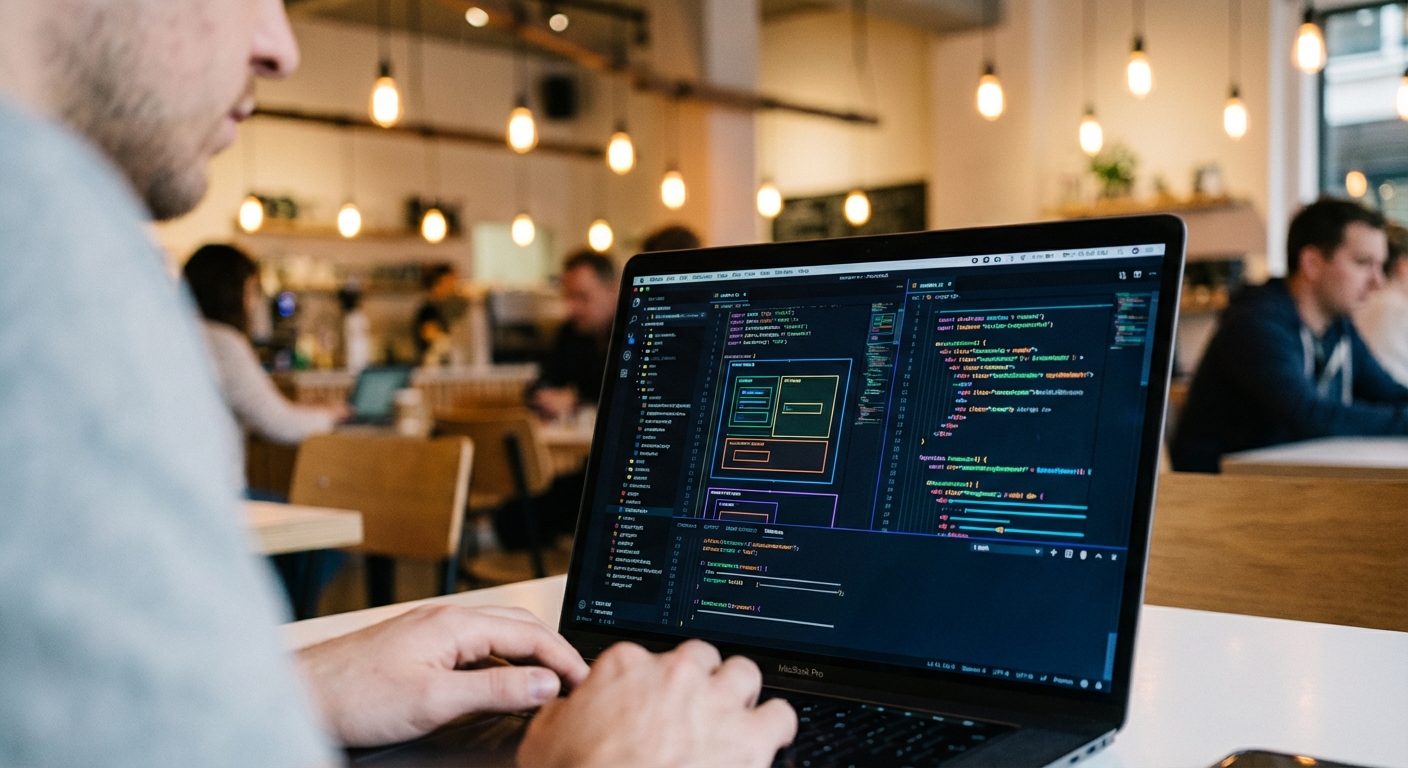
(1) UNIX-based Operating System: Resembles a Server
The biggest technical reason developers use MacBooks is that macOS is a UNIX-based system. It shares the same roots as Linux servers, which account for the majority of servers worldwide.
Why is this important? When a developer deploys code written locally (on their computer) to a server, the probability of errors occurring due to environmental differences is significantly reduced. Terminal commands (`ls`, `cd`, `grep`, `ssh`, etc.) are nearly identical to the server environment, allowing for a seamless workflow.
On the other hand, Windows has a different file system structure and method for setting environment variables. While WSL (Windows Subsystem for Linux) has improved recently, the stability and compatibility provided by a native UNIX environment still give the MacBook the upper hand.
(2) The Unification of iOS, Android, and Web Development
If you dream of app development, the MacBook is practically your only choice. To develop iPhone apps (iOS), a tool called Xcode is essential, and it runs exclusively on macOS.
If you buy a Windows laptop, you can develop Android apps and websites, but you will eventually face double expenditure as you'll need to buy a MacBook to create iPhone apps. In contrast, a MacBook can handle Android Studio, web development tools, and even Xcode—covering all platforms on a single device.
Just as "all roads lead to Rome," it is no exaggeration to say "all app development leads to MacBook."
(3) Easy Installation and Management via Package Manager: Homebrew
When developing, you need to install countless libraries and tools. On Windows, you often have to go through the complex process of downloading installation files, clicking 'Next' repeatedly, and setting environment variables.
However, the Mac has a powerful package manager called 'Homebrew'. Just typing a single line like `brew install python` in the terminal handles everything from installation to path settings. This convenience drastically reduces initial development setup time. For developers, time is salary. It's more profitable to write one more line of code than to waste time on tool installation.
3. Overwhelming Efficiency: The Revolution of M-Chips (Apple Silicon)
When Apple ditched Intel chips and released its self-developed M1 chip in 2020, the IT industry turned upside down. Now, continuing with M2 and M3, that gap has widened even further. This is like a blessing for both video editing and development.
(1) No Performance Drop Without Power Connection
Most high-end Windows laptops see their performance cut in half the moment you unplug the power adapter. This is to forcibly limit performance to prevent battery drain.
But the MacBook is different. Even when working solely on battery power at a cafe, it delivers the exact same peak performance. This means you can do heavy 4K video rendering or complex code builds anywhere—whether on a train or a park bench—without scrambling to find a power outlet. Isn't this the true meaning of a 'Laptop (Portable)'?
(2) Freedom from Heat and Noise
In the days of Intel MacBooks, they sounded like "airplanes taking off." However, Apple Silicon chips have monstrous power efficiency. Even the MacBook Air, which has no fan at all, handles 4K video editing effortlessly, and it's hard to hear the fans spin on a MacBook Pro unless you're doing incredibly heavy tasks.
Being able to work in a quiet library or study cafe without feeling self-conscious, and not having to worry about your laptop burning your lap, provides immense satisfaction in terms of user experience (UX).
4. Fail-Safe MacBook Buying Guide & Checklist
You know MacBooks are good, but you might be struggling with the many options. Here are suggestions tailored to your situation.
📋 Checklist to Find the Right MacBook for You
- Beginner Video Editing / Web Dev / College Students
👉 MacBook Air (M1, M2, M3) : The king of value. We recommend upgrading RAM to 16GB. Sufficient for 4K cut editing. - Commercial Video Editing / 3D Work / Large Scale App Dev
👉 MacBook Pro 14-inch/16-inch (Pro, Max chips) : Features cooling fans beneficial for long rendering sessions and offers great expandability with more ports. - Storage (SSD) Tip
👉 If you are a video editor, we recommend at least 512GB. Even if you use an external SSD, if the base storage is too small, the system can slow down due to cache files.
5. Value Beyond Hardware, We Deliver 'Dreams'
A MacBook is not just a machine. The excellent display lets your content shine, and the stable development environment helps you implement your ideas without bugs. While the initial investment is high, considering the high resale value—where you can recover more than 50% of the price even after 3 years of use—it is actually economical in the long run.
"Tools should be smart, Dreams should be grand."
Now that you have the best tool called a MacBook, what matters is what you make with it. Instead of struggling alone through trial and error, do you want to set the right direction?
At 'Dreams (꿈을담아)', we journey with you from planning to development so that your ideas can be implemented into actual services. For your first project starting with a MacBook, we will be your reliable running mate.
Apply for Free Consulting to Make My Dream a Reality →